
Whether you own an electric vehicle (EV) or are considering purchasing one, it’s important to recognize conditions that can potentially delay a charge. Understanding charging variables can help drivers optimize their charge and enable more informed decisions on the road. From hardware specs to battery health to external temperatures, several conditions can influence charging duration - learn about six of the most common ones below.
1. Weather
How can weather impact charging speeds?
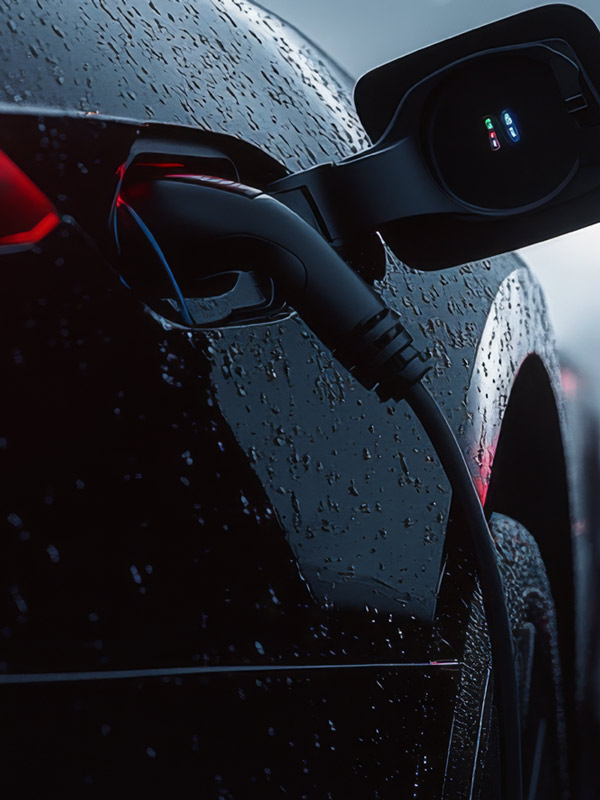
The temperature of your electric vehicle (EV) battery can greatly affect charging speed. While most EVs are equipped with thermal management systems to help regulate battery temperature, extreme cold and heat will likely slow down a charge. Although this can be frustrating, a slower charge in extreme temperatures happens for a reason. Delayed charging speeds at extreme temperatures help preserve battery health, maintain performance, and ensure safety.
2. Charger Type
How does the charger type affect charging speeds?
There are three levels of EV chargers, each offering different power levels that impact charging speeds:
- Level 1 chargers provide ~1.92 kW of power, typically taking 12-20+ hours to charge an EV.
- Level 2 chargers offer ~7.68 kW, reducing charge time to approximately 5-7 hours.
- Level 3, or DC Fast Chargers (DCFC), provide ~50 kW+, enabling a full charge in 30-60 minutes.
If you are looking for a quick stop-and-go charge that takes under an hour, use a Level 3 fast charger. If you want to charge overnight or while you work, a Level 2 station will suffice, charging most EVs in 5-7 hours. Browse through Chargie’s hardware to learn more about the different station types.
3. Load Sharing
How does load sharing technology influence charging speeds?
Some charging stations support load sharing or load management technology, which allows power to be distributed to multiple vehicles charging simultaneously. This distribution can be done equally across all charging vehicles, or on a first-come, first-served basis. Both methods can lead to extended charge times for users. However, these distribution systems are essential for many properties to ensure power usage stays within the grid’s limitations.
4. EV Maximum Charging Rate
How does a vehicle’s maximum charging rate impact charging speeds?
Each EV has a maximum charging rate, which is the greatest amount of power the vehicle can draw from a charger at any given time. For instance, plugging into a 50-kW fast charger doesn’t ensure your vehicle will charge at that speed; it can only pull as much power as it’s designed to handle. Some EVs allow you to manually adjust this rate, while others may have lower limits set automatically to help preserve long-term battery health. Check your car manual for your vehicle’s specifics.
5. Battery Deterioration
How can battery deterioration affect charging speeds?
Over time, EV batteries may begin to lose some of their ability to hold and utilize charge, a process known as battery deterioration. Factors such as battery age, frequent use of DC fast charging, and exposure to extreme temperatures can accelerate this process. A deteriorated battery will take longer to charge and provide less range than when it was new, similar to a smartphone battery.
6. Battery’s State of Charge
How does an EV’s State of Charge (SoC) impact charging duration?
State of charge indicates how full your EV battery is. Charging doesn’t happen at a constant rate; it speeds up when the battery is low and slows as it approaches full capacity. This is why charging from 20% to 80% is often quicker than topping off from 80% to 100%. This tapering process helps protect the battery but can increase total charging duration if aiming for a full charge. It’s recommended to keep your battery between 20% and 80% to preserve battery life, and charge beyond 80% only when necessary.
Chargie Offers Fast, Reliable Charging for Drivers and Owners
Chargie stations provide dependable charging every time. Our 24/7 service, 98%+ availability, and industry-leading hardware mean you can rely on stations to work whenever you need them. With Chargie, expect to get where you need to go when you need to. Ready to get stations installed in the places that matter most? Connect with one of our EV charging experts to learn more.